East Oahu voters challenge results of City Council election

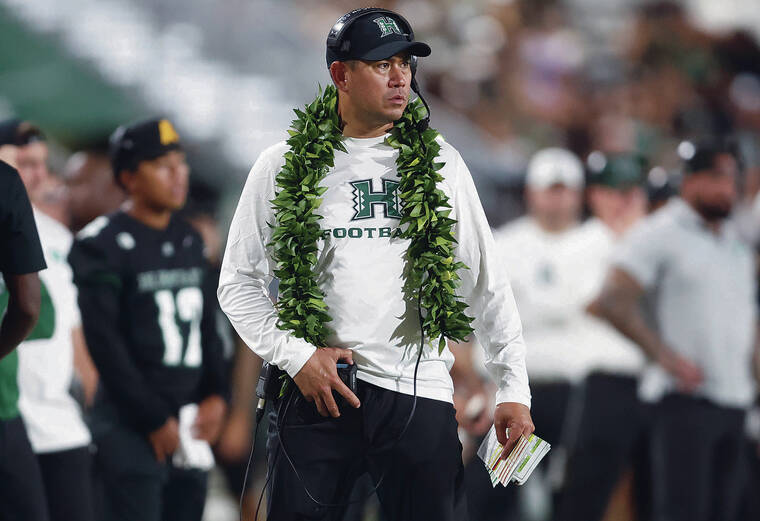
Forty Oahu voters in a district served by Honolulu City Council Chair Tommy Waters are challenging the validity of results in Hawaii’s Aug. 8 primary election for the seat held by Waters.
The voters filed the challenge with the Hawaii Supreme Court on Friday.
They claim in part that they were disenfranchised by actions taken by the elections division of the Office of the City Clerk declaring Waters ineligible to run over a term-limit issue based on a Circuit Court ruling made after some voters had voted.
The 40 voters, represented by local attorney Thomas Otake, contend that Waters should advance to the general election based on his second-place finish behind Trevor Ozawa, and that Waters should not have been declared ineligible by city elections officials because the Circuit Court ruling that declared Waters ineligible wasn’t allowed under state law.
”Plaintiffs request … the (Supreme) Court declare that Waters is eligible … and (to) direct the City Clerk and other election officials to follow the election results and have Waters run against Ozawa in the General Election on November 3, 2026,” the complaint states.
If the high court deems an election to have been invalid, a new election could be ordered held within 120 days of the judgment under state law.
Don't miss out on what's happening!
Stay in touch with breaking news, as it happens, conveniently in your email inbox. It's FREE!
Natalie Iwasa, a CPA and Honolulu Authority for Rapid Transportation board member who lives in District 4 represented by Waters, is the lead plaintiff. She said the Circuit Court’s July 27 ruling and Aug. 1 declaration by the elections division of the Office of the City Clerk that Waters was ineligible wasn’t fair to district voters who already had received ballots and in some cases already voted.
“It’s really not fair to those voters who had voted prior to that,” she said.
Iwasa said she didn’t vote for Waters because of the Circuit Court ruling that he was ineligible.
Other plaintiffs in the challenge include former City Council member Joey Manahan, former Waters law office partner Richard Sing, Waters staff member Kevin Imanaka, Kuliouou-Kalani Iki Neighborhood Board member Jeannine Johnson and longtime Democratic Party activist Bart Dame.
The challenge is the second case pending before Hawaii’s high court over the eligibility of Waters, who is seeking reelection after serving nearly all of an initial four-year term plus a second term that ends Jan. 2.
The city charter states, “No person shall be elected to the office of councilmember for more than two consecutive four-year terms.”
On June 5, Ozawa, an attorney and former Council member, filed an objection with the city challenging Waters’ candidacy, and acting City Clerk Chadd Kadota determined Waters could remain on the ballot. That led Ozawa to appeal Kadota’s decision to Circuit Court.
Circuit Judge James Ashford ruled against Waters on July 27, 12 days before the primary election and after some voting by mail was underway. On Aug. 1, Honolulu election officials advised voters that Waters was ineligible as a candidate.
Ashford’s ruling prompted an appeal by Waters to the Hawaii Intermediate Court of Appeals that was advanced, under a request from Ozawa, to the Hawaii Supreme Court on Thursday.
The Supreme Court set a deadline for parties to file briefs by this Thursday, and scheduled oral arguments for Tuesday.
Part of the challenge initiated by the hui of voters seeks to have Waters declared eligible and have his votes counted, thus advancing him to the general election, instead of third-place finisher Tara Malia Gregory, to face Ozawa.
“The Circuit Court’s ruling and subsequent disqualification by the Honolulu Elections Division caused a ‘difference in the results’ and it falls on the (Supreme) Court to determine who is qualified to run against Ozawa,” the complaint said, adding that a resolution could also establish a precedent for how partial terms are treated in future elections unless a legislative change is made.
The complaint from the 40 voters also argues in part that the appeal by Ozawa in Circuit Court wasn’t permissible under a state law governing primary election candidates, Hawaii Revised Statutes section 12-8.
“HRS § 12-8 does not authorize a challenger who disagrees with the City Clerk’s determination to pursue declaratory (court) relief while the primary election is underway,” the complaint states. “Section 12-8 is the exclusive means in which a citizen can challenge a nomination. They … are not allowed to hijack the election, undermine the democratic process with a declaratory judgment action, and create the chaos that has ensued in the District IV Election.”
Furthermore, the complaint by Iwasa and others contends that city election officials “interfered” with the election because the Circuit Court order did not direct them to tell voters that Waters was ineligible.
“The Honolulu Elections Division may have acted in good faith,” the complaint said. “But it nevertheless changed the election result.”
Ozawa said in a statement that he respects the right of every voter to be heard, in an election or in a courtroom, but that plaintiffs on a list that he said Waters assembled isn’t the voice of the district.
“The Supreme Court will bring this to a fair and final resolution, and I have full confidence in that process,” Ozawa said.