UH regents approve tuition increases under 4-year plan
STAR-ADVERTISER / 2025
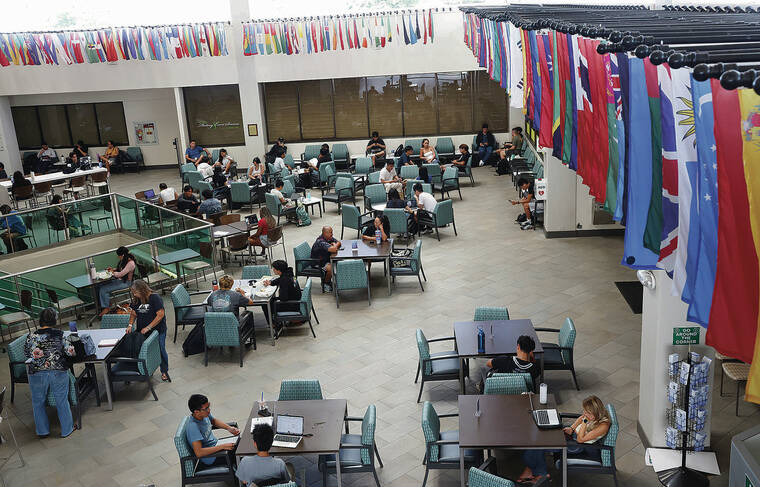
University of Hawaii students say rising tuition and living expenses are making college increasingly difficult to afford. Students study and socialize at the UH Manoa Campus Center.
The University of Hawaii Board of Regents approved a new four-year tuition schedule Thursday that will keep tuition for most students unchanged for two years before increases take effect across most of the university system.
The board voted 7-2 to approve the plan, which will take effect in the fall 2027 term and run through the 2030-31 academic year. Tuition for both resident and nonresident undergraduate students at UH Manoa will increase 5% in each of the last two years of the plan, with 3% increases for students at the UH Hilo and West Oahu campuses.
The biggest exception to the new tuition schedule is UH Hilo’s Daniel K. Inouye College of Pharmacy, with a 5% increase annually starting in fall 2027 to meet accreditation requirements and cover operating costs.
At UH Manoa, resident undergraduate tuition is currently $11,760 a year. It will remain at that rate for two years before increasing to $12,360 in the 2029-30 academic year and nearly $13,000 the following year.
Nonresident undergraduate tuition would remain unchanged at $33,792 for the first two years before increasing 5% in each of the last two years of the plan.
At the UH campus in Hilo and West Oahu, resident undergraduate tuition is currently $7,632 a year. That will remain unchanged for two years before rising to $7,872 in 2029-30 and $8,112 the following year. Nonresident tuition, now set at $20,592, would see the same 3% increases over the final two years.
Don't miss out on what's happening!
Stay in touch with breaking news, as it happens, conveniently in your email inbox. It's FREE!
Community college students will see smaller increases. Resident lower-division tuition, currently $131 per credit, will remain unchanged for two years before increasing to $135 per credit in 2029-30 and $139 the following year.
UH officials said the increases are needed because tuition has not kept pace with inflation and the cost of running the university system has risen. The additional money is expected to help campuses maintain course offerings and workforce programs, repair aging facilities and expand student services such as advising, tutoring and need-based scholarships.
But students note that tuition is only one part of the cost of attending college in Hawaii, where housing, food and transportation expenses can add significantly to their financial burden.
Megan Aubrey, a second-year UH Manoa psychology student, worries the higher tuition could make college even harder to afford. Born and raised in Hawaii, she moved back to the islands after several years away to be closer to family and eventually live and work in the community.
She works part time, picking up shifts after class on weekdays and on weekends because she cannot balance a full-time job with school. She takes home roughly $1,500 a month after taxes. Aubrey said that about $850 of that amount goes toward rent and utilities in a Waialae home she shares with five roommates, leaving her about $650 for food, transportation, school and other expenses.
Aubrey initially lived in a college dorm but found it too expensive. She later moved home to Kaneohe but the commute to classes was difficult, prompting her to move into shared housing closer to the UH campus.
“You say education is important, but you’re making it harder to access,” she said. “Universities need the money, students need the education — so who has to give something up? UH may be affordable for in-state students, but when you factor in housing and the cost of living, it becomes so unaffordable.”
Aubrey said she knows several students who have dropped out and worries that financial pressures can make it difficult for students to stay enrolled.
“We work tirelessly just to afford food and housing, and then we have to pay tuition on top of all of that,” she said. “Not everyone has parents who can afford to — or want to — pay for their education.”
Aubrey and fellow UH student Isabella Del Rosario will not be directly affected by the new tuition increases because they’ll be done before then. But both said they are already struggling with the cost of attending college, raising questions about how future students will manage as tuition and other living expenses continue to rise.
Del Rosario, 24, is a UH Hilo student pursuing a bachelor’s degree in environmental studies with a planning certificate. With little financial help from her parents, she is largely paying her own way through college and said another tuition increase is frustrating.
She said education should remain accessible, especially as more jobs require a college degree.
“Education is something that should always be accessible for me and anyone who wants to further themselves through life,” Del Rosario said.
Other students raised similar concerns during the university’s public review process. About 35 people, most of them UH Manoa students, testified against the proposed tuition increases at the Board of Regents meeting Thursday.
UH held four public meetings in October and received written and online feedback. Overall, 75% those who provided comments identified affordability as a concern. About 79% of those who submitted comments or testified during the public review period were students, according to a report presented to the regents.
Some students supported parts of the proposal, including the two-year tuition freeze, reduced summer tuition at community colleges and increased student support services.
For another UH Hilo student, Zaide Perez, scholarships have made the difference between being able to afford college and struggling to pay tuition.
The 18-year-old first-year nursing student said financial aid has been crucial in making college affordable. Perez said her scholarships are covering her first year and that having to pay tuition would be difficult without that support. She plans to seek additional scholarships to help with future costs.